


10 Best Books About Peace to Help You Find Inner Peace and Live More Peacefully


What are the best books about peace?
It sounds like a simple question, but peace can mean something different depending on what we are experiencing. Sometimes we are searching for inner peace during a difficult season. Sometimes we want to quiet an anxious or busy mind. We may be trying to forgive, heal a relationship, understand someone with a different perspective, live more mindfully, or figure out how one person can possibly contribute to a more peaceful world.
The best books about peace don't necessarily promise a life without conflict, grief, stress, or uncertainty. Instead, they can help us change the way we meet those experiences.
Some of the books below approach peace through mindfulness and presence. Others explore meaning, compassion, acceptance, communication, joy, or our relationships with other people. Together, they offer something even more important than an escape from the noise around us: different ways to practice peace within the lives we are already living.
If you're looking for books about inner peace, mindfulness, compassion, healing, or creating a more peaceful life, here are ten worth reading.
1. Peace Is Every Step by Thich Nhat Hanh

Peace Is Every Step remains one of the most recognized books about mindfulness and inner peace. Zen master, teacher, and peace activist Thich Nhat Hanh brings mindfulness into ordinary daily experiences and shows that we don't have to retreat from our lives in order to experience greater peace.
That may be one of the most important lessons in any book about peace. We can spend years believing we'll finally feel peaceful when life settles down, a problem disappears, someone changes, or our circumstances improve. But peace can also be practiced in the middle of an imperfect day.
For readers interested in mindfulness, presence, meditation, and finding peace in everyday life, this is an excellent place to begin.
2. The Book of Joy by the Dalai Lama and Desmond Tutu with Douglas Abrams
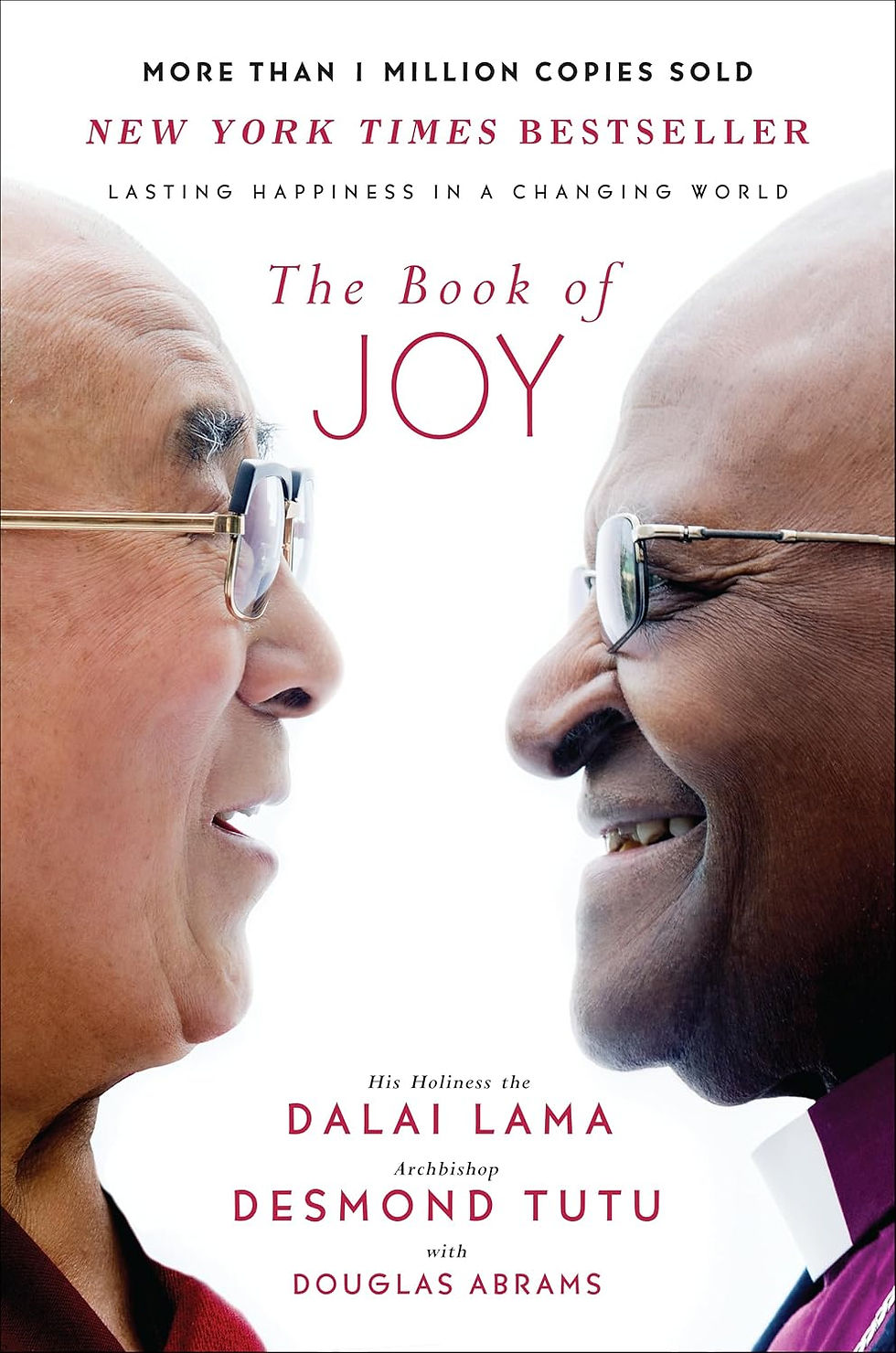
What can two people who have witnessed extraordinary suffering teach us about joy?
Quite a lot.
The Book of Joy grew from conversations between the Dalai Lama and Archbishop Desmond Tutu during several days they spent together in Dharamsala, India. Their discussions explore suffering, forgiveness, compassion, perspective, humor, gratitude, and the possibility of experiencing joy even when life is difficult.
One reason this book belongs on a list about peace is that it challenges the assumption that peace requires perfect circumstances. We can experience grief and joy. Difficulty and gratitude. Uncertainty and peace.
Life rarely gives us only one thing at a time.
3. The Peace Guidebook by Elizabeth Hamilton-Guarino and Dr. Katie Eastman

The Peace Guidebook: How to Cultivate Hope, Healing, and Harmony for the Good of Humankind asks a practical question: How do we actually practice peace in real life?
Written by bestselling author Elizabeth Hamilton-Guarino and psychotherapist and grief expert Dr. Katie Eastman, The Peace Guidebook explores peace through ten principles organized around Hope, Healing, and Harmony.
The book begins with presence, potential, and patience; moves through practice, passion, purpose, and positivity; and continues into perseverance, partnership, and ultimately peace. Through stories, reflections, exercises, and practical tools, the authors explore how peace can influence our relationships, families, workplaces, communities, leadership, and the way we respond when life becomes difficult.
Rather than presenting peace as passive or as the absence of problems, The Peace Guidebook encourages readers to consider the choices they make within those problems.
One of its simplest practices is:
Pause. Breathe. Choose.
That small pause between what happens and what we do next can matter enormously. We may not control another person's behavior, an unexpected change, a painful loss, or everything happening in the world around us. But we can become more intentional about what we bring to the next moment.
The Peace Guidebook is especially well suited for readers searching for a practical book about finding inner peace, navigating change, developing hope, healing emotionally, strengthening relationships, and creating greater peace in everyday life.
It also helped inspire the work of Percolate Peace and a larger invitation: don't simply hope for a more peaceful world. Consider the role each of us can play in creating one.
Peace begins with me and grows through us.
4. Wherever You Go, There You Are by Jon Kabat-Zinn

Jon Kabat-Zinn has played an important role in bringing mindfulness practices into mainstream Western medicine and culture, and Wherever You Go, There You Are remains an accessible introduction to mindfulness.
The premise is right there in the title. We can change jobs, relationships, locations, routines, and circumstances, but eventually we meet ourselves wherever we go.
Mindfulness invites us to become more aware of the present moment without constantly trying to escape, judge, or change it. For anyone looking for a book about mindfulness and inner peace, this is a foundational read.
5. Man's Search for Meaning by Viktor E. Frankl
Man's Search for Meaning may not immediately appear to be a traditional book about peace, but it belongs in this conversation.
Psychiatrist Viktor Frankl wrote about his experiences surviving Nazi concentration camps and the ideas that later became central to logotherapy, his approach to meaning and human existence.
The book confronts suffering rather than offering an easy way around it. It asks us to consider meaning, responsibility, attitude, and the choices that may remain available to us even when much of what is happening is beyond our control.
For anyone thinking deeply about resilience, meaning, suffering, and inner freedom, it is an extraordinary book.
6. The Four Agreements by Don Miguel Ruiz

The four agreements at the center of this bestselling book sound remarkably simple: be impeccable with your word, don't take anything personally, don't make assumptions, and always do your best.
Then try practicing them on an ordinary Tuesday. 😂
Think about how much conflict in our lives begins with assumptions, words spoken carelessly, perceived slights, misunderstandings, or our interpretation of someone else's behavior.
The Four Agreements encourages readers to examine some of the patterns and beliefs that contribute to unnecessary suffering. It is particularly useful for readers interested in greater peace within relationships as well as within themselves.
7. A New Earth by Eckhart Tolle

A New Earth examines ego, consciousness, identity, attachment, and the thought patterns that can contribute to both personal suffering and conflict with others.
It asks readers to become more aware of the stories and identities we construct around ourselves and the ways our need to be right, recognized, superior, or in control can influence our behavior.
It's one of the more philosophical books on this list, but its exploration of ego makes it especially relevant to anyone interested in the relationship between consciousness and peace.
8. Radical Acceptance by Tara Brach

Sometimes the person we're fighting with most is ourselves.
In Radical Acceptance, psychologist and meditation teacher Tara Brach combines psychological insight with Buddhist teachings and mindfulness practices to explore fear, shame, self-judgment, and the feeling that we are somehow inadequate.
Acceptance does not mean that everything is acceptable or that we stop trying to change what needs changing. Instead, it can mean seeing reality more clearly and meeting ourselves with compassion rather than remaining locked in a constant internal battle.
For readers looking for books about self-compassion, mindfulness, emotional healing, and inner peace, Radical Acceptance offers a thoughtful approach.
9. The Art of Happiness by the Dalai Lama and Howard C. Cutler

The Art of Happiness brings together the Dalai Lama's perspective and psychiatrist Howard Cutler's questions about happiness, relationships, anxiety, loneliness, suffering, and emotional well-being.
One of the valuable ideas running through the book is that happiness isn't simply something that happens when life gives us everything we want. Our habits of thought, perspective, compassion, and relationships with other people all influence the way we experience our lives.
That makes happiness and peace much more closely connected than we may initially think.
10. Nonviolent Communication by Marshall B. Rosenberg

Inner peace matters, but eventually we have to talk to other people.
That's where things can get interesting.
Nonviolent Communication explores how we communicate our feelings and needs, listen to others, and navigate disagreements without immediately falling into judgment, blame, defensiveness, or attack.
It's an important addition to a list of books about peace because peace isn't only something we experience internally. It becomes visible in our relationships and conversations, particularly when we disagree.
You can meditate peacefully every morning, but eventually someone is going to annoy you.
What happens next is where the practice gets real.
What Is the Best Book About Finding Inner Peace?
There probably isn't one best book about peace for every reader because the book you need may depend on the kind of peace you're seeking. If you're interested in mindfulness and becoming more present in your everyday life, Peace Is Every Step or Wherever You Go, There You Are are wonderful places to begin. If you're looking for joy, compassion, and perspective during difficult times, The Book of Joy offers a very different kind of wisdom.
For readers who want a practical framework for practicing peace in everyday life, relationships, work, leadership, and community, The Peace Guidebook offers tools for bringing peace into the situations we actually encounter. If self-judgment or acceptance is getting in the way of your peace, Radical Acceptance may speak to you. Man's Search for Meaning offers a profound exploration of meaning and inner freedom during suffering, while Nonviolent Communication can be especially helpful for anyone trying to create more peace within conversations, relationships, and conflict.
The important thing isn't reading every book on this list. It's finding the book that meets you where you are and then allowing what you learn to influence the way you live.
Don't Just Read About Peace. Practice It.
Books can introduce us to new ideas, challenge the way we think, comfort us during difficult times, and occasionally give us a sentence or idea that stays with us for years. But eventually, we close the book and return to our lives. That's where the real practice of peace begins.
Peace becomes what we do during the conversation that could turn into an argument. It's how we respond when we're hurt, disappointed, frustrated, or afraid. It's whether we listen before assuming, make room for another person's humanity, forgive when we can, ask for forgiveness when we need to, and choose compassion without abandoning our own boundaries.
A more peaceful world can feel like an impossibly large goal, but none of us has to begin with the whole world. We can begin with ourselves, the people around us, and the choices directly in front of us. We can begin with the next conversation, the next reaction, and the next opportunity to respond differently.
Pause. Breathe. Choose.
Peace doesn't have to begin somewhere far away. It can begin right where you are.
Peace begins with me and grows through us.


Comments